
Production Studios Amsterdam: A Sourcing Guide
How to source the right stage across the Amsterdam studio belt and the wider Dutch media belt — sizes, amenities, virtual production, day-rate structure, and booking lead times
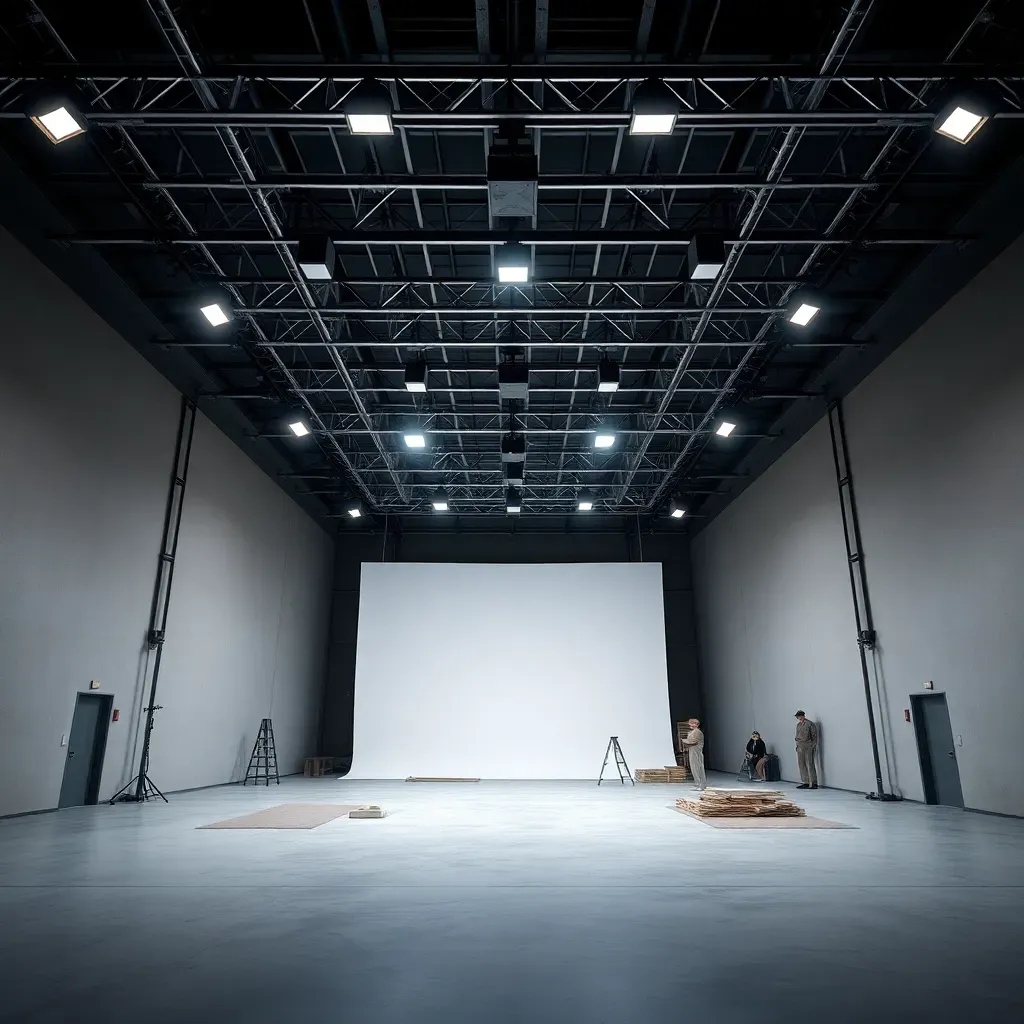
Sourcing production studios Amsterdam is a different exercise from booking a stage in London or Berlin, because the city's capacity sits in a distributed belt across the city and the wider Dutch media region rather than one central lot. The Amsterdam studio belt — the NDSM Wharf conversion stages in Amsterdam-Noord, the Westpoort harbour belt, and the post and VFX houses around the Westergasfabriek in Amsterdam-West — pairs with the Media Park in Hilversum, the historic centre of Dutch broadcasting and the country's largest single concentration of stage capacity, just 30 minutes by train from Amsterdam Centraal. That spread is a strength once you know it: talent and creative leads stay in the centre while trucks and builds sit inside a normal travel radius. This guide is the studios deep-dive companion to our Amsterdam city guide. We cover how to choose a stage, what each studio is best for, how day rates are structured, how far ahead to book, and which sites carry backlots and virtual production volumes.
30 minutes amsterdam to hilversum · NDSM Wharf flagship conversion stage · 2–16 weeks booking lead time
How to Choose Production Studios Amsterdam Productions Trust
Stage Size, Soundproofing, Daylight, and Support Spaces
Before you shortlist any filmstudio Amsterdam offers, four criteria decide whether a stage actually fits the shoot. Match the build, the format, and the crew footprint to these before you compare anything else.
- ●Stage size and clear ceiling height — the usable build volume, not just the floor footprint
- ●Soundproofing class — whether the stage is a true silent soundstage or an insulated shooting space
- ●Daylight access — blackout-capable stages for controlled light versus skylit rooms for natural light
- ●Support spaces — green rooms, makeup, wardrobe, production offices, and on-site parking
Stage Size, Ceiling Height, and Build Volume
The headline number on any opnamestudio Amsterdam listing is floor area, but ceiling height is what decides whether a build, a crane move, or a top-light rig fits. A 1,000 m² stage with an 8-metre grid suits most drama and commercial work; period builds, large set pieces, and overhead lighting packages want 10 to 14 metres of clear height. Always read the usable build volume rather than the gross floor figure, since doors, structural columns, and the lighting grid all reduce what you can actually shoot in. We confirm grid height, floor loading, and door dimensions for every stage we source, because a set that cannot clear the loading door is a costly mistake to find on build day.
Soundproofing, Daylight, and Support Spaces
A true soundstage is acoustically isolated for live sync sound; an insulated shooting space is not, which matters the moment you record dialogue near a flight path — and Amsterdam sits close to Schiphol — or a busy road. Decide early whether you need full blackout for controlled lighting or daylight access for natural light, because the two stage types rarely overlap. Then weigh the support footprint: green rooms, makeup and wardrobe rooms, production offices, scenic workshops, and on-site parking turn a bare stage into a working base. For inbound shoots that struggle with central Amsterdam loading limits and the city's strict cyclist-flow rules, on-campus parking and workshops often matter more than the stage rate itself.
Production Studios Amsterdam: The Major Stages
NDSM Wharf, the Westpoort Belt, Media Park Hilversum, and the Service-Led Stages
The major production studios Amsterdam productions rely on are spread across the city and the wider Dutch media belt, each with a clear specialty. The summary below pairs each site with the formats it serves best, so you can shortlist by use-case fit rather than by floor area alone.
- ●NDSM Wharf (Amsterdam-Noord) — former shipyard now hosting large-volume conversion stages
- ●Westpoort harbour belt and Amsterdam-Noord — flexible warehouse-style stages with car access and high ceilings
- ●Media Park Hilversum — the country's largest stage concentration, 30 minutes by train from Amsterdam Centraal
- ●Service-led stages — stage rental bridged with lighting, grip, and the wider equipment side
NDSM Wharf — Amsterdam-Noord
The NDSM Wharf in Amsterdam-Noord — a former shipyard now turned creative-industries cluster, reached by the free GVB ferry from Centraal Station — is the city's flagship stage conversion site. Its large industrial structures and warehouse volumes host large-scale stage builds popular for commercials, music videos, and one-off feature builds, with the graffiti-covered walls and harbour register that anchor Amsterdam's industrial and dystopian visual vocabulary. For inbound shoots that want a Cinecittà-equivalent footprint without leaving the city limits, the NDSM Wharf is the default first call when central Amsterdam hotel bases and stage-to-location turnarounds under an hour both matter. It is the closest Amsterdam itself comes to a single large-volume campus, paired with the harbour belt around it.
The Westpoort Belt and Amsterdam-Noord Stages
The Westpoort harbour belt and the wider Amsterdam-Noord industrial zone provide flexible warehouse-style stages with car access and high ceilings, well suited to commercial shoots and short-form drama that need scale without the full broadcast infrastructure of Hilversum. Several stages, conversion spaces, and dressing rooms sit within reach of on-site parking, which helps when trucks would otherwise struggle with central Amsterdam loading limits and the city's cyclist-flow rules. Crew rosters across the harbour belt run deep on commercial and music-video work. These stages are best suited to shoots that need a flexible footprint, standing builds, or a self-contained base inside the city limits rather than the broadcast-grade silent stages of the media park.
Media Park Hilversum
Media Park Hilversum, 30 minutes by train from Amsterdam Centraal, is the historic centre of Dutch broadcasting and the largest single concentration of soundstage capacity in the country. The campus holds many stages used for Dutch network drama, talk shows, scripted series, and global co-productions, alongside post-production and VFX facilities that have grown significantly in the streamer-led production cycle. For inbound long-form drama and scripted television, Hilversum is the default first call when you need central Amsterdam hotel bases and stage-to-location turnarounds under an hour. The direct, frequent train connection lets talent and key creative comfortably commute between an Amsterdam base and the Hilversum stage day to day. It is the only Dutch site with both the scale and the broadcast infrastructure to run a series end to end.
Service-Led Stages and Equipment Pairings
Beyond the dedicated campuses, Dutch rental houses cluster around Amsterdam-West, the Westpoort harbour belt, and the Hilversum media campus, bridging stage rental with the equipment side — lighting, grip, power, and trucking. For shoots building custom stages or running blue and green-screen work without a full Hilversum footprint, the Amsterdam-based service layer is often the most flexible partner, because the stage and the gear package come from the same source. This is also the route worth checking first when studio budgets are tight: pairing a mid-size stage with an in-house lighting package usually lands lower than sourcing the two separately. We brief virtual production and LED-volume options in the next section.
Virtual Production and LED Volumes in Amsterdam
When an LED Stage Earns Its Premium
Virtual production has moved from novelty to a real option across the Dutch studio belt. An LED volume is not the right answer for every shoot, so the question is less whether one exists and more whether your project actually needs one.
- ●LED volumes suit reflective subjects, driving sequences, and tight location windows you cannot otherwise clear
- ●Pre-built environments and real-time backgrounds cut location days and weather risk
- ●Volumes carry a clear premium over a standard stage and need a Brain Bar and content pipeline
- ●Green-screen on a flexible stage remains the lower-cost route for many VFX-led builds
What a Volume Is Best For
An LED volume replaces a green-screen wall with a curved array of LED panels playing a real-time, camera-tracked background. It earns its premium on three jobs above all: reflective subjects such as cars, glass, and chrome that green-screen handles badly; driving and travel sequences that would otherwise need a full process trailer and street closures — particularly valuable in Amsterdam, where canal-side and cyclist-flow constraints make road work hard; and shoots where the location simply cannot be cleared in the window available. The Dutch belt's larger campuses, from Hilversum to the Amsterdam-Noord conversion stages, can host volume builds, and the service-led equipment partners supply the lighting and tracking around them. For everything else, a well-lit green-screen on a flexible stage is still the cheaper and faster route, and we will say so when that is the honest answer.
The Hidden Costs Around the Volume
The stage rate is only part of a virtual production budget. A volume needs a content pipeline — the digital environments built and rendered ahead of the shoot — plus a Brain Bar of real-time operators running the playback on the day. The Amsterdam post and VFX sector, one of the strongest in the Benelux–DACH region, is well placed to build these assets. Lead times stretch accordingly, because the environments must be ready and tested before anyone steps on the stage. Budget for the asset build, the operator team, and a technical rehearsal day on top of the stage hire. Done well, the saving on location days, travel, and weather contingency more than covers it; done as an afterthought, it does not. We scope the full pipeline, not just the stage, when we source a volume so the comparison against a location shoot is honest.
How Studio Day Rates Are Structured
What Sits Inside the Quote, and What Does Not
Studio pricing in Amsterdam varies by stage, by week, and by project, so we do not publish fixed figures here. What is stable is the structure of a quote — and reading it correctly is what keeps a studio budget from drifting.
- ●Base stage hire is quoted per day, scaled to floor area, ceiling height, and stage specification
- ●Build, shoot, and strike days are usually priced differently — build and strike often at a reduced rate
- ●Power, lighting grid use, climate control, and cleaning may be line items rather than included
- ●Support spaces, parking, and security are frequently billed on top of the base stage rate
Reading a Studio Quote
An Amsterdam studio quote is built in layers. The base is the daily stage hire, scaled to floor area, clear height, and specification — a true silent soundstage costs more than an insulated shooting space of the same size. On top of that, build and strike days are usually priced separately from shoot days, often at a reduced rate, so a long build can shift the total more than the headline shoot-day figure suggests. Then come the variable line items: power and generator hire, use of the lighting grid, climate control, internet, and end-of-run cleaning. The right way to compare two studios is to total a realistic build-shoot-strike schedule with the line items in, not to compare base day rates side by side.
What Drives the Number Up or Down
Several factors move a studio rate that have nothing to do with the stage itself. Season matters: the belt tightens around the autumn drama season and the streamer-led production peaks, and a stage held in a quiet week prices more keenly than the same stage in a peak one. Length of hire matters too, since multi-week holds carry better effective rates than single days. Specialist facilities — large clear-height stages and LED volumes — sit at the top of the range and book out furthest ahead, with Hilversum's broadcast stages the most competitive. Gear day rates across the Randstad are broadly comparable to Berlin and Brussels and meaningfully lower than London or Paris. Because the figure swings this much, we price each shoot against a live schedule rather than a rate card, and we fold the up to 35% Netherlands Production Incentive picture in so the net cost, not the gross, drives the decision.
Booking and Lead Times
From Week-Of Pickups to Months-Out Holds
How far ahead you need to commit depends entirely on the stage and the season. Small flexible stages can come together in days; flagship space and full builds need to be held months out.
- ●Small and mid-size stages: often bookable within a week outside peak windows
- ●Flagship stages and standing builds: four to twelve weeks of lead time
- ●Specialist facilities — large clear-height stages, LED volumes: eight to sixteen weeks
- ●Peak windows — autumn drama season, streamer production peaks, festival weeks — add two to three weeks
Lead Times by Stage Type
A mid-size commercial or music-video stage in the Westpoort belt or on the NDSM Wharf can often be held within a week outside peak windows, which suits the tight schedules that short-form work runs on. Flagship broadcast stages at Media Park Hilversum and standing builds need far more notice — four to twelve weeks is realistic, because long-form drama and features hold them across competing shoots year-round, particularly since the streamer-led volume increase. Specialist facilities sit furthest out: large clear-height stages and LED volumes can need eight to sixteen weeks once you account for the build and rehearsal time around them. The autumn drama season and festival weeks like King's Day and IDFA tighten the whole belt, so add two to three weeks to any estimate that lands in those windows.
How Booking Actually Works
Booking an Amsterdam or Hilversum stage runs on a hold-then-confirm rhythm. We place a provisional hold on the dates while the schedule firms up, then convert it to a confirmed booking with a deposit, usually against a signed stage agreement that sets the build-shoot-strike days and the line items. Because the major studios field inbound enquiries in Dutch and field-book against competing productions, an early hold through a local partner is what protects your dates — a stage you call about cold two weeks out may already be held. We carry standing relationships with the NDSM Wharf, the Westpoort belt, the Hilversum Media Park, and the service-led stage teams, so we can check live availability, place holds, and read a stage agreement quickly. To start a studio search, contact us at /contact/ with your build dates and stage specification.
Backlots, Exterior Facilities, and Nearby Satellites
Exterior Builds and Studios Across the Randstad
Not every shoot needs an interior stage. Backlots, exterior build space, and satellite studios across the wider Randstad open up controlled exteriors and larger footprints than the central Amsterdam belt can offer.
- ●The NDSM Wharf carries open industrial yard space for controlled exterior builds beside its stages
- ●Media Park Hilversum offers exterior build space alongside its broadcast soundstages
- ●Satellite studios across the Randstad — Rotterdam, The Hague, Utrecht — suit large footprints and standing exterior sets
- ●Exterior facilities trade the central-hotel radius for space, so weigh travel against build size
Backlots and Exterior Build Space
A backlot is controlled exterior space on the studio campus, where you build standing sets in the open with the security, power, and support of the studio behind you. The NDSM Wharf pairs its conversion stages with open industrial yard space, and Media Park Hilversum offers exterior build areas alongside its broadcast stages. This matters for period streets, exterior facades, and any build you want to light and reset without clearing a public Amsterdam location and its Gemeente and Waternet permits each day. For productions weighing a backlot build against a real Amsterdam location, the trade is control and repeatability against authenticity — and that decision sits right next to the permit and location-scouting work covered in our Amsterdam city guide and at /blog/commercial-shoot-locations-city/.
Studios Across the Randstad
Beyond the immediate belt, the wider Randstad — Rotterdam, The Hague, and Utrecht, all within an hour of Amsterdam by train — carries satellite studios and standing exterior sets that suit footprints the central campuses cannot hold. These sites trade the under-an-hour central-hotel radius for space — larger backlots, room for full street builds, and fewer neighbourhood constraints than a stage hemmed in by the city's cyclist-flow and loading limits. The compact Randstad geography means gear, crew, and post can move flexibly across the four cities inside a single shoot week. The trade-off is travel time for cast and crew, so they earn their place on bigger builds and longer schedules rather than fast commercial turnarounds. We scope the whole Randstad map, not just the inner Amsterdam ring, when a shoot needs exterior scale.
Common Questions
How far in advance should I book a studio in Amsterdam?
It depends on the stage and the season. Small and mid-size stages on the NDSM Wharf and in the Westpoort belt can often be held within a week outside peak windows. Flagship broadcast stages at Media Park Hilversum and standing builds need four to twelve weeks. Specialist facilities — large clear-height stages and LED volumes — can need eight to sixteen weeks once you account for build and rehearsal time. Add two to three weeks for the autumn drama season, the streamer production peaks, and festival weeks like King's Day and IDFA, when the whole belt tightens.
What is a typical day rate for a stage in Amsterdam?
We do not publish fixed figures, because studio rates vary by stage, by week, and by project. What is stable is the structure: a base daily stage hire scaled to floor area, ceiling height, and specification, with build and strike days usually priced separately from shoot days. Power, lighting-grid use, climate control, parking, and cleaning are often line items on top rather than included. The right comparison totals a realistic build-shoot-strike schedule with the line items in, and we price each shoot against a live schedule and fold the up to 35% Netherlands Production Incentive in so the net cost holds no surprises.
Can I rent equipment with my studio booking?
Yes, and on some sites it is the most economical route. Dutch service-led stage operators around Amsterdam-West and the Westpoort belt bridge stage rental with lighting, grip, power, and trucking, so pairing a mid-size stage with an in-house equipment package usually lands lower than sourcing the two separately. Even where the studio does not supply gear directly, the Amsterdam belt clusters rental houses, prop houses, and art-department workshops within a tight radius. We source the stage and the equipment together so the lighting grid, power draw, and floor loading all match before build day.
Do studios in Amsterdam support virtual production?
Yes. The Dutch studio belt, from Hilversum to the Amsterdam-Noord conversion stages, can host LED-volume and virtual production builds, with equipment partners supplying the lighting and camera-tracking around the volume. A volume earns its premium on reflective subjects such as cars and glass, on driving sequences that Amsterdam's canal-side and cyclist-flow constraints make hard on the street, and on shoots where the location cannot be cleared in the available window. It also needs a content pipeline and a real-time operator team on top of the stage hire, so we scope the full pipeline — not just the stage — to check it against a green-screen or location alternative before recommending it.
What is the difference between a studio and a soundstage?
A soundstage is acoustically isolated for live sync sound recording, so dialogue stays clean even near a flight path — and Amsterdam sits close to Schiphol — or a busy road. A studio, or insulated shooting space, may share the same floor area but is not sound-treated to the same class, which is fine for playback-driven work but a problem the moment you record dialogue. Daylight access is the other dividing line: blackout stages give fully controlled lighting, while skylit rooms offer natural light. We confirm the soundproofing class and daylight setup of every stage we source against what the shoot actually records.
Where are the main production studios in Amsterdam located?
Amsterdam's capacity sits in a distributed belt rather than one central lot. The NDSM Wharf and the Westpoort harbour belt host conversion and warehouse-style stages inside Amsterdam-Noord; service-led rental stages cluster around Amsterdam-West; and Media Park Hilversum, 30 minutes by train from Amsterdam Centraal, holds the country's largest single concentration of broadcast soundstages. All of them are reachable from central Amsterdam in under an hour, which lets talent and creative leads stay in central hotels while trucks and builds sit inside a normal travel radius. The wider Randstad — Rotterdam, The Hague, Utrecht — adds satellite studios for larger footprints.
Related Services
Sourcing a Studio in Amsterdam?
Whether you need a broadcast stage at Media Park Hilversum for a streaming series, a large conversion stage on the NDSM Wharf, a fast warehouse stage in the Westpoort belt, or an LED volume with the full pipeline scoped, our Amsterdam team holds the studio relationships and reads the stage agreements so your dates and your budget stay protected. We source the stage, the equipment, and the support spaces together, and we fold the up to 35% Netherlands Production Incentive picture in so the net cost drives the decision.